St. Clair College continues to demonstrate its steadfast commitment to strengthening community health and wellbeing through collaborative partnerships that place lived realities at the centre of research, education, and innovation.
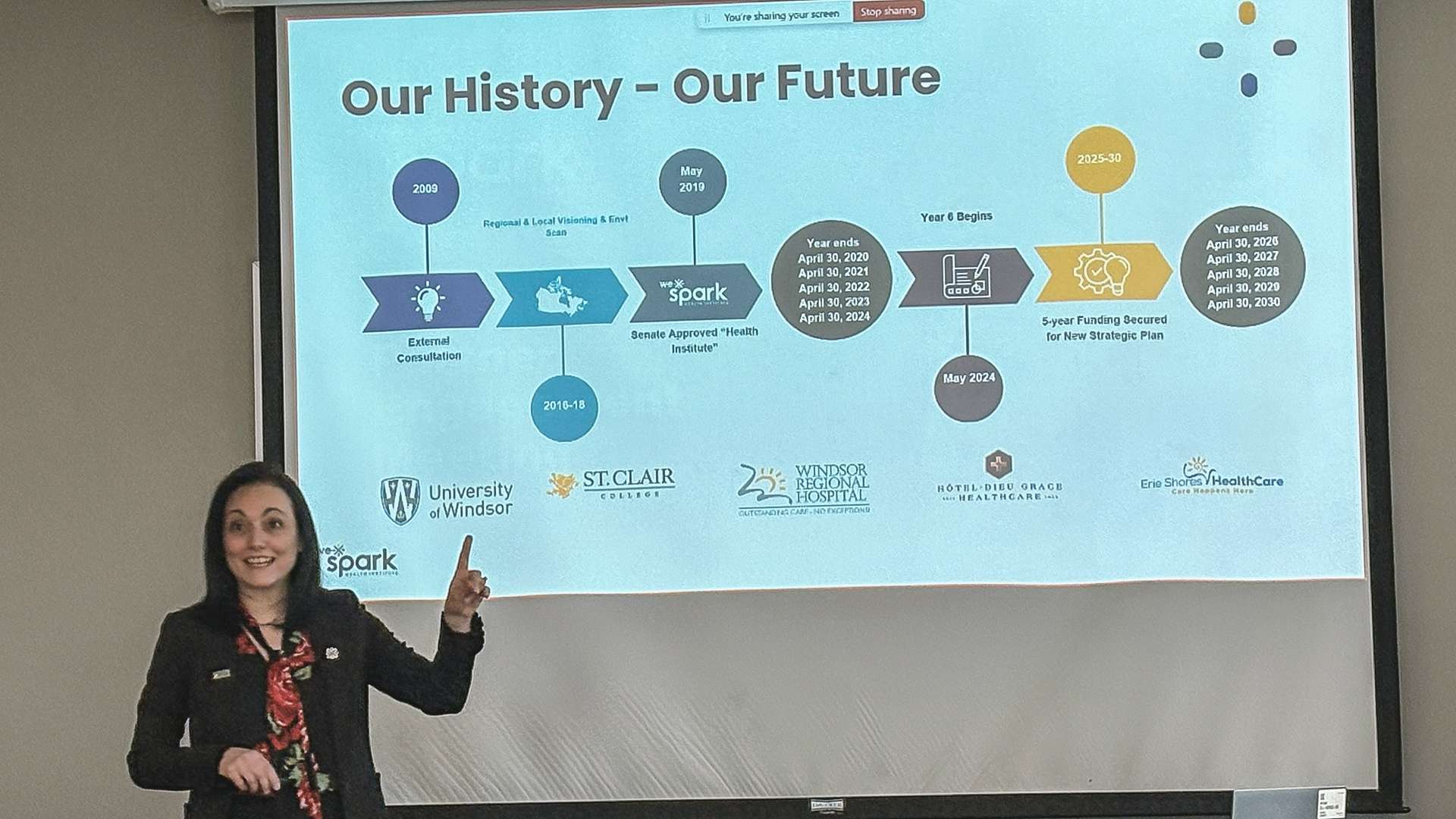
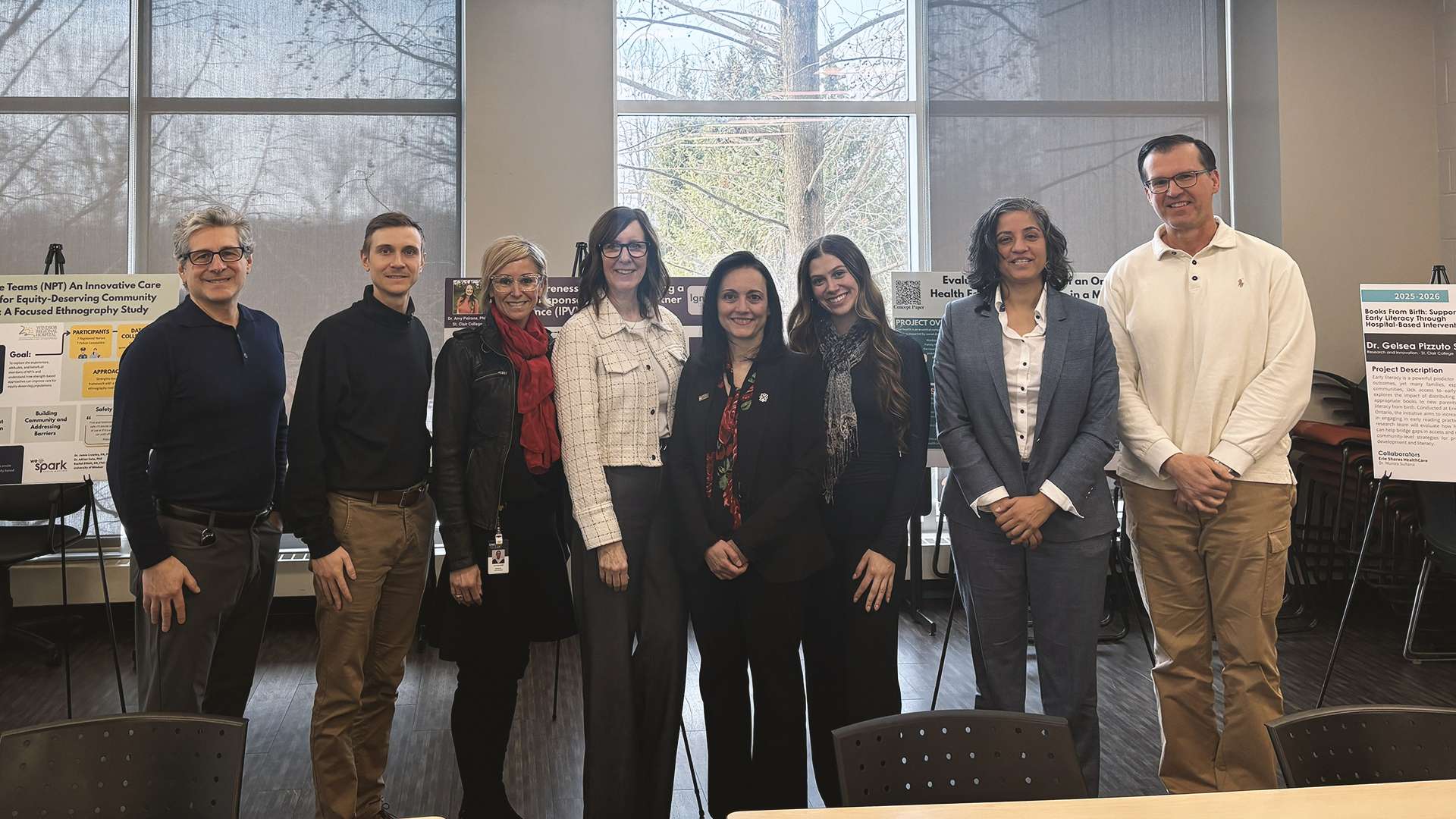
A recent partner engagement session hosted by WE-SPARK Health Institute brought together faculty, students, and regional health leaders to explore how applied research pathways can better support the evolving needs of Windsor-Essex.
The visit reaffirmed St. Clair College's role as a founding partner in advancing regional health research and highlighted the College's reputation as a responsive and community-driven institution. Conversations focused on expanding access to real-world health research opportunities, supporting faculty-led applied projects, and creating clearer pathways for students to participate in interdisciplinary initiatives that directly impact community wellbeing.
Dr. Dora Cavallo-Medved, Director of the WE-SPARK Health Institute, emphasized the strength of the collaboration and the importance of building sustainable systems that support regional health innovation.
"As one of WE-SPARK's founding partners, St. Clair College continues to lead as a transformative community builder and collaboration," said Dr. Cavallo-Medved. "The discussions highlighted the College's vital role in advancing regional health research and innovation, and we're excited to deepen this partnership."
Karen Metcalfe, Assistant Director at WE-SPARK, reflected on the energy and engagement experienced throughout the visit.
"St. Clair's commitment to hands-on learning is clear the moment you walk through the door," Metcalfe said. "Our visit gave us the chance to meet people where they are and show how WE-SPARK can support their research interests in a very real and practical way. We left feeling energized and excited."
For St. Clair College, community health is rooted in the belief that strong systems and structures must reflect the lived realities of the people they serve.
Through Research and Innovation, the College continues to embed student researchers, faculty expertise, and community voices into projects that prioritize wellbeing, accessibility, and meaningful engagement.
"Community wellbeing grows when institutions are willing to pause, reflect, and respond to the realities people carry with them into our spaces," said Dr. Karamjeet K. Dhillon, Director of Research and Innovation at St. Clair College. "Health is not built through programs alone — it is shaped through relationships, trust, and systems that recognize the social, cultural, and economic contexts of everyday life.
"At St. Clair, we are intentionally designing pathways where research and learning are grounded in community voice, where students and partners co-create solutions, and where wellbeing becomes a shared practice rather than a distant goal," Dr. Dhillon added.
The engagement session also reinforced the College's broader vision of applied research as a catalyst for regional transformation — creating opportunities for learners while strengthening partnerships that advance health outcomes across Windsor-Essex.
By aligning program strengths with emerging health priorities, St. Clair College continues to foster a collaborative ecosystem where innovation and care intersect.
"St. Clair College is committed to our continued collaboration with WE-SPARK Health Institute as an integral part of our strategic plan," said Monica Staley Liang, Senior Vice President of Academic and Career Supports at St. Clair College. "Enhancing research and serving our community with our students and faculty is at the Centre of this important work."
Readers interested in learning more about membership opportunities and future engagement sessions can visit https://www.wesparkhealth.com/join-us.
All St. Clair College students, staff, and faculty are members of WE SPARK Health Institute.To fully participate and access programs, resources, and supports, registration is needed.