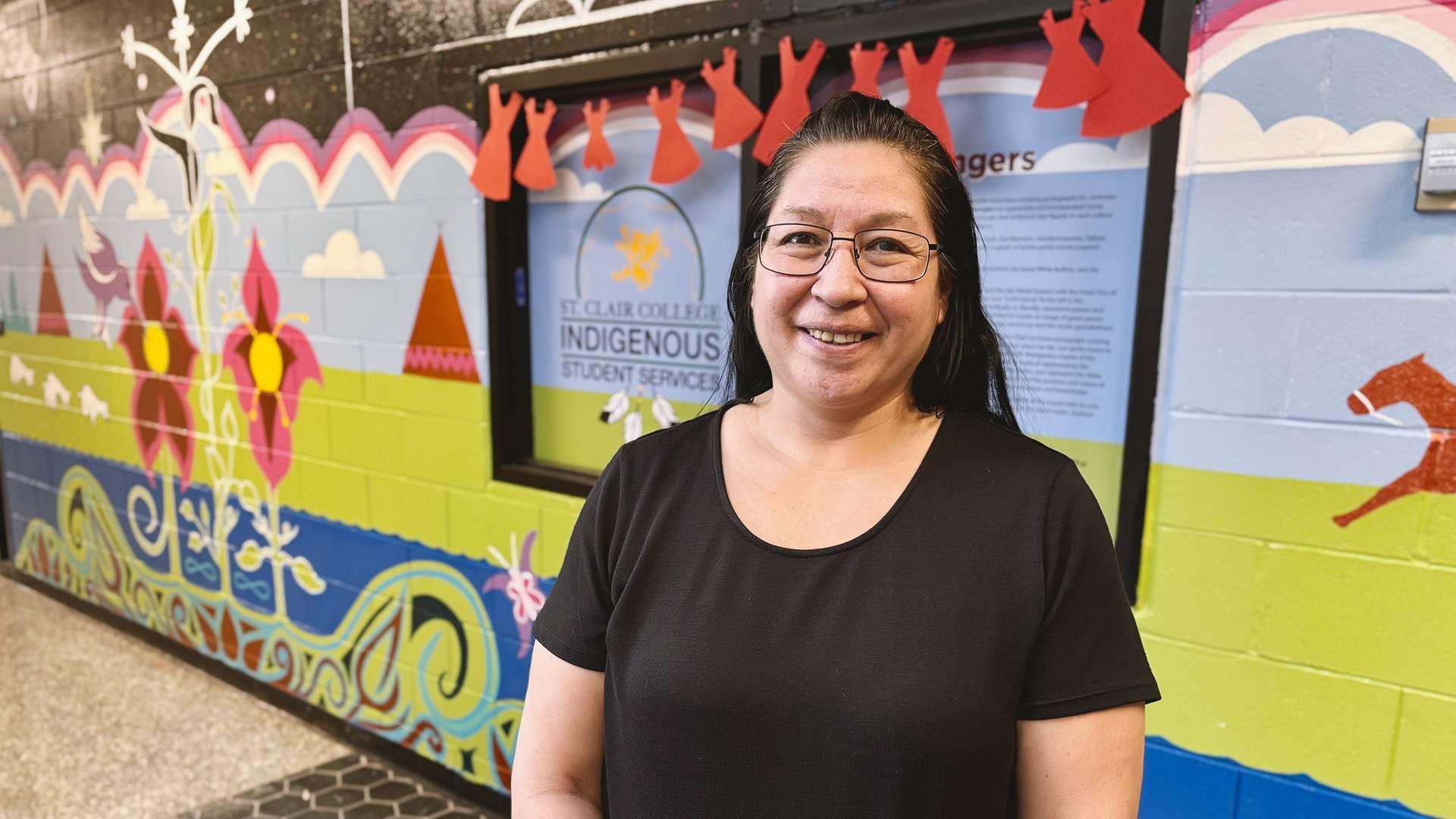
When Tina Jacobs first enrolled at St. Clair College in 2014, she lasted two weeks before withdrawing.
She was nervous, shy, and felt out of place.
"I didn't know how to get help. I didn't know where to go," she recalled.
In fact, growing up, Jacobs didn't even think post-secondary education was an option for her.
"None of us did. To my friends or anything," Jacobs said.
Now, Jacobs is the Indigenous Learning Advisor at St. Clair College and has these five especially important words for First Nations, Inuit and Metis students attending the College: "I am here for you."
"I'll tell them what I can do for them, and I'll tell them I won't push you. But think of me as your cousin or your aunt or your grandma, whatever you need," Jacobs said. "I want you to stay here. I want you to succeed."
And Jacobs, along with Indigenous Counsellor Muriel Sampson, have noticed an uptick in the number of Indigenous, Metis and Inuit students who were on campus during the 2025-2026 academic year.
"I started putting it together, and I was like, we have a lot of indigenous people here," said Jacobs. "It's from all across Canada."
Thirty-five different First Nations are represented in Fall 2025 enrollment data – "The most we have ever seen," said Jacobs, noting the population of Indigenous, Metis and Inuit students is roughly 100 – for whom are accounted. Jacobs believes that are more First Nations and Metis students who are self-identified and not sponsored by a community.
That increase is also reflected in the number of students who utilize services of the Indigenous Student Centre.
In 2023, the centre was visited 571 times by students. In 2024, that number jumped to 981 visits. And in 2025, that number ballooned to 1,970 visits.
"The word is getting out that I'm here to service the community, and that's only good news when it comes to recruiting new students, because there is a community within a community," Jacobs said. "I get emotional when I see all these kids here."
It gives parents peace of mind that their kids will be taken care of," she added.
During drop-ins, students work on looms and dreamcatchers, ribbon skirts and other Indigenous cultural arts and crafts. Sometimes they come for food and nourishment. Sometimes, it's nourishment for their souls. Jacobs does everything from running smudging for students to one-on-one help with computers.
"The cultural support of the Indigenous Student Services Centre and the staff make me feel at home when I am away from my community," said student Bradford Yesno. "My instructors are encouraging, the administration staff are very helpful, and Student Services counsellors have assisted in the success of my educational journey."
Students also have access to language resources, peer support, life coaching, assistance with scholarship applications, community presentations, and referrals to additional College and community services when needed.
"It's a community, because they can talk about stuff with the other kids, that's how they lived too, they know what you're talking about," Jacobs said.
Jacobs had a full circle moment when reflecting on her own journey to St. Clair College – and how she tries to make sure today's students feel supported and welcome.
"Now, I'm in a position to help. I've walked students to their first day to their classes just to get them familiar. I've sat in on presentations because they're so nervous that they have to talk in front of other students," said Jacobs. "I sit in the back, and they see me, and they feel comfortable."
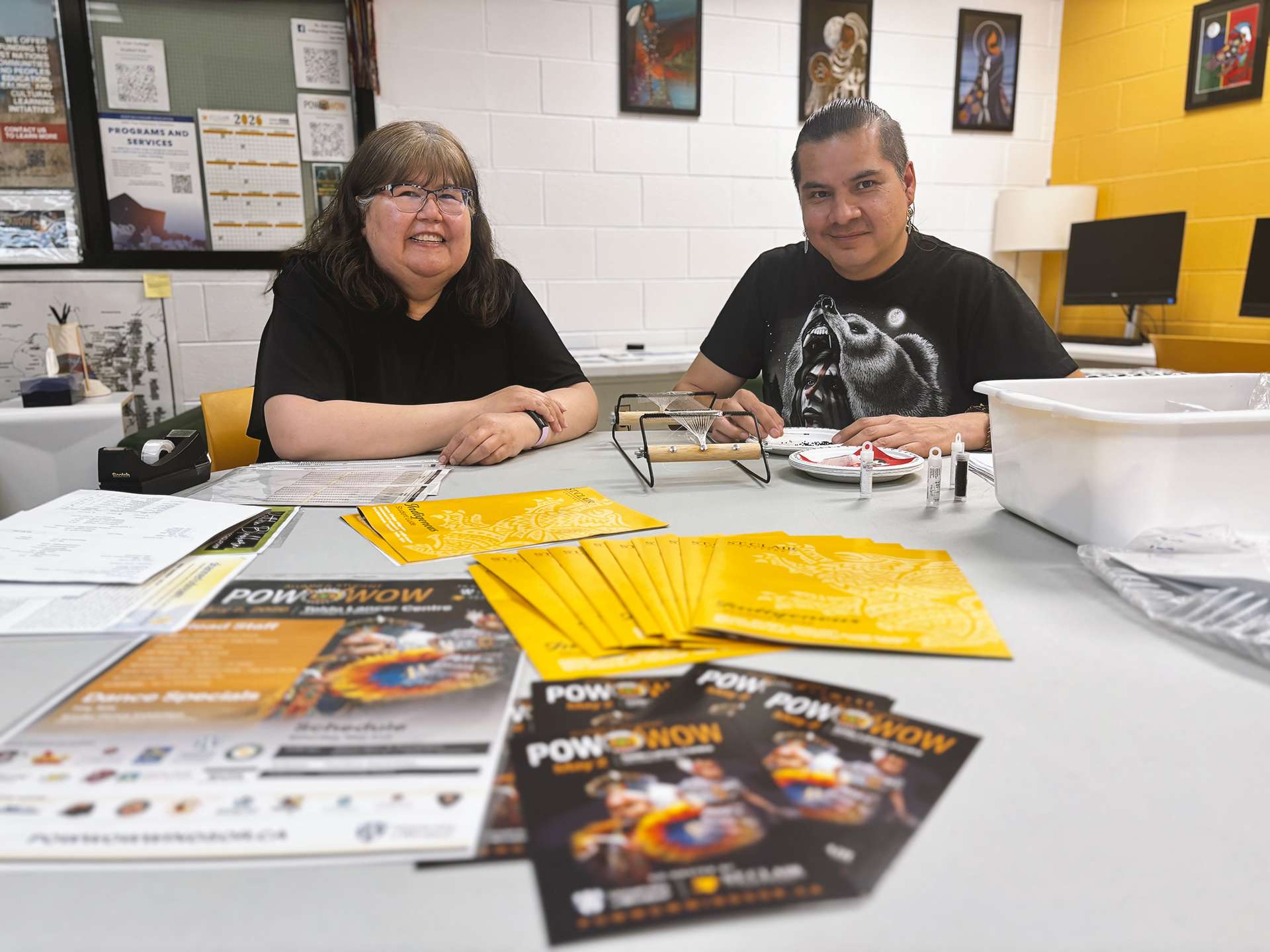
Muriel Sampson has been an Indigenous Counsellor at St. Clair College for 13 years and says it is important to recognize the diversity of Indigenous Peoples.
"There are over 634 First Nations in Canada who speak more than 70 distinct Indigenous languages, representing 12 unique language families," Sampson said. "St. Clair has supported many Indigenous students from all over Turtle Island on their lifelong learning journey. We have generations of families that have attended St. Clair. I know of grandparents and parents of students from my Nation alone."
"We have been a witness to the same unwavering commitment at St. Clair. By building upon the work of those that came before us, and have worked alongside of us, St. Clair College has co-created the Indigenous spaces and services that we have for students today," said Sampson. "It is important to acknowledge the support and advocacy that has provided these services and spaces for St. Clair students."
"Advocacy changes lives."
Sampson says St. Clair College Indigenous graduates are all over Turtle Island making the change that they want to see in this world and creating opportunity and space for Indigenous Peoples to join them.
"Many are the first to hold space in those places. It is important for Indigenous Peoples to see these graduates in those spaces. It was important to me. Representation matters."
Sampson also commends Jacobs for the work she does with students to make them feel more at home, while away from home.
"She is an amazing spirit and shares her lived experience with students. With her love and energy, she provides a culturally safe space for Indigenous students," Sampson said. "This is reflected in the increase in students using the Centre."
"When students feel seen, heard, and supported they can achieve their learning goals and dreams. Indigenous students are reclaiming space and creating room for even more Indigenous students who choose post-secondary education," said Sampson.
At St. Clair College, the Indigenous Learning Advisor and Counsellor work closely with students and staff to create a vibrant, supportive community through a wide range of social and cultural activities on and off campus.
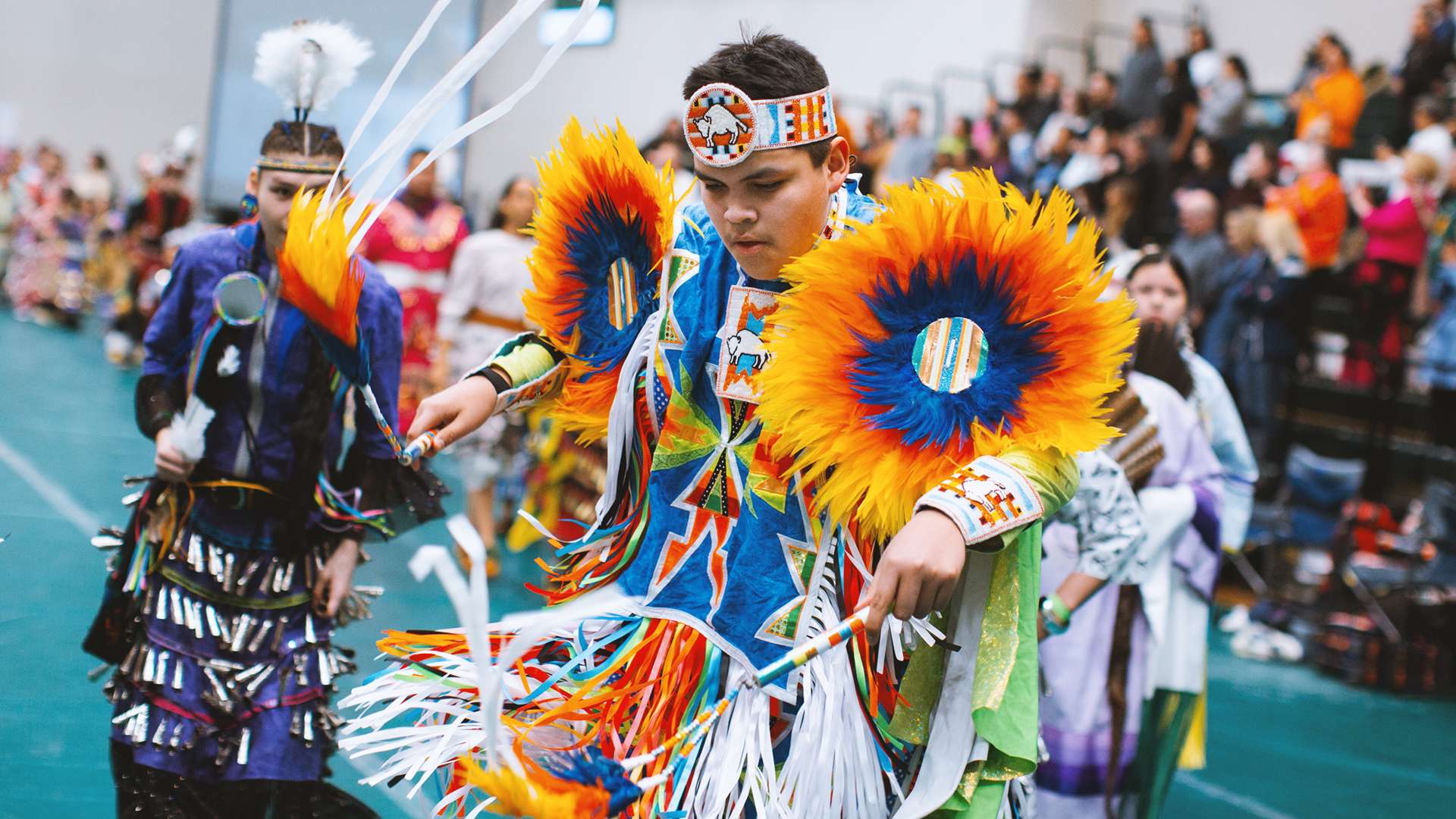
They partner with First Nations and Indigenous organizations to host meaningful events throughout the year, including the annual Student and Alumni Pow Wow, which is co-hosted by the College and University of Windsor. This year's event takes place at the Toldo Centre at the University on May 2, 2026, from noon to 5 p.m.
There will also be the Moose Hide Campaign Day ‘Walk to End Violence' on May 14 at the pond at Main Windsor Campus, where Indigenous and non-Indigenous Canadians will gather at noon to support reconciliation, and help end violence against all women and children.
"It's inspiring to see students from so many Indigenous Nations across Ontario and Canada engaged with our services at St. Clair College," said Art Barron, Institutional Lead, Campus Operations and Student Services at St. Clair College's Chatham Campus. "Our Indigenous Student Centre provides a home away from home — a welcoming, stress free space where students can learn, connect, and grow together."
Wisdom as Pathway, Intention as Practice
The following expression was penned by Indigenous Education and Council Committee member, and Director of Research and Innovation at St. Clair College, Dr. Karamjeet K. Dhillon.
When I look around our spaces at the college lately, I feel like I am standing beside a blanket that is being woven in real time. Threads moving in and out, colours deepening, hands from many directions adding what they can.
As a traveler to Turtle Island, I am learning how to weave without taking over the loom, how to contribute without disrupting the pattern that has been forming long before I arrived. Two Eyed Seeing has taught me that I don't have to abandon the way I was trained, but I do need to soften it, expand it, and let it be shaped by relationships, land, and experience.
What I see happening at St. Clair is more than meetings, retreats, or program planning. Underneath all of that, students are arriving with stories on their backs and hopes in their hands. Elders and Knowledge Keepers step in carrying teachings that don't announce themselves—they just arrive, quiet and steady, like someone placing another piece of brightly dyed wool onto the loom. And the community, with all its responsibilities and expectations, sits with us in a way that says: if you are going to help weave this, do it with care.
I am learning to listen differently. In Western work, you listen to solve. Here, I am learning to listen to understand, to feel, and sometimes simply to witness. A student talking about home. An Elder explaining a teaching without naming it. Silence in a circle that says more than anything spoken aloud. These moments stretch me in the best ways.They teach me to walk slower, speak less, and let the thread settle before tugging it forward.
There are days when I feel the Seven Grandfather Teachings moving around the room even if no one names them.
Love shows up when someone brings soup to a student who hasn't eaten. Respect is there when we pause a meeting so someone can smudge. Courage is in the staff who speak up—kindly, firmly—for more ceremony space or more Indigenous leadership in decision making. Humility is in the ways we admit we don't always know what to do, but we're willing to learn. Honesty shows itself in the stories students share about what hasn't worked for them. Wisdom shows up in the way land-based learning brings stillness to people who haven't felt calm in months. And truth? It reveals itself when our intentions start to match our actions.
The land is teaching me more than I expected. A medicine walk is not just a lesson in plants; it's a reminder that the world isn't arranged in straight lines and deadlines. Standing outside with students, hearing leaves crack underfoot or watching clouds change shape, I realize that learning isn't supposed to be severed from place. The land has its own memory, its own pace, its own teachings—and when we let it guide us, the weaving gets tighter, more honest.
There are moments when I know my role is to speak up, especially in rooms where Indigenous colleagues have been carrying too much of the weight. There are other moments where I know I should stay quiet and make space. And there are many moments where my job is just to hold the tension on a thread—steadily, respectfully—so someone else can weave their part with ease.