What if the greatest barrier to employment isn't a lack of potential, but a lack of opportunity to demonstrate it?
That question sits at the heart of a new three-year applied research initiative at St. Clair College, supported by approximately $360,000 from the Natural Sciences and Engineering Research Council of Canada (NSERC) through its College and Community Social Innovation Fund (CCSIF).
Titled Bridging the Experience Gap, the project will explore how young adults facing significant employment barriers can participate in designing the very programs intended to support their entry into the workforce.
Working in partnership with Windsor-based community organization New Beginnings, St. Clair College researchers will engage youth, employers and community partners in developing, testing and evaluating a new employment readiness model grounded in lived experience.
The initiative focuses on marginalized young adults in Windsor-Essex, including those navigating barriers associated with racialization, involvement with child welfare or justice systems, housing instability and other social challenges.
For many young people, the challenge is not simply acquiring workplace skills. It is accessing the opportunities, relationships and environments in which those skills can be developed, demonstrated and recognized.
From Lived Experience to Research Knowledge
Rather than beginning with assumptions about what young people lack, the research will begin by listening to what they know.
Through participatory action research, youth will contribute to identifying gaps in existing employment services, designing program activities, participating in skills development and work placements and evaluating what works.
Their experiences will become an important source of knowledge, helping researchers understand not only whether an employment intervention is effective, but how it is experienced by the people participating in it.
This approach recognizes that knowledge is not confined to classrooms, research reports or institutional expertise. It also emerges through relationships, daily challenges, community participation and the practical experience of navigating systems that do not always respond to individual circumstances.
By bringing these perspectives together, the project aims to develop an employment readiness model that reflects both workforce expectations and the realities of the young people entering it.
Research That Extends Beyond the Classroom
For St. Clair College, the project also creates opportunities for faculty, staff and student researchers to connect academic learning with the complexity of real-world social challenges.
Students involved in the research will have opportunities to develop skills in community engagement, data collection, program evaluation and knowledge mobilization.
"This is another opportunity that allows Community and Justice Services students to enhance their skills through research, program planning and implementation," said Melissa Kakuk, program coordinator and professor at St. Clair College. "I am excited to collaborate with New Beginnings, a community partner that has already been so supportive of student learning."
Just as importantly, they will encounter the human dimensions of research: learning to listen, question assumptions, navigate uncertainty and understand the responsibilities that come with generating knowledge about people's lives.
These experiences can deepen the relationship between education and community practice, challenging the idea that expertise flows in only one direction.
"Youth unemployment and underemployment are a major problem in Canada, with the youth unemployment rate remaining higher than pre-pandemic levels," said Dr. Kyle Jackson, Professor and Coordinator in the Honours Bachelor of Applied Arts in Social Justice and Legal Studies program. "In our region, the rates are even higher. I am hoping this participatory and practical research will identify some unexpected barriers and strengths to build on in order to promote system-level change in our community."
Community partners bring knowledge developed through years of working directly with youth. Employers contribute an understanding of workforce expectations. Researchers provide methods for examining evidence, testing approaches and evaluating outcomes. Young people contribute the lived experiences necessary to make those efforts relevant.
Together, these perspectives create opportunities for learning that no single partner could produce independently.
Building Workplaces That Recognize Potential
An important dimension of Bridging the Experience Gap is its engagement with approximately 10 to 15 employers across retail, hospitality, food services, manufacturing and skilled trades.
Participating employers will help co-design the program, provide mentored work placements and contribute to evaluating employment outcomes.
The research will examine not only how young people can strengthen their readiness for employment, but also how employers can adapt recruitment, mentorship and workplace support practices to recognize abilities that conventional hiring processes may overlook.
This creates an opportunity to rethink employment readiness as a shared responsibility. The project will explore measures including workforce readiness, employment outcomes and longer-term job retention, while considering how the quality of support, mentoring and workplace experience can contribute to those outcomes.
Measuring What Matters, Mobilizing What We Learn
Securing research funding represents an important beginning. Understanding what the investment changes is the longer-term responsibility.
Over the project's three-year duration, the research team will gather evidence from youth participation, program implementation, employer engagement and evaluation activities to understand which approaches show promise and under what conditions.
The intention is not simply to produce a research report, but to translate findings into practical knowledge that community organizations, educational institutions and employers can use.
A key anticipated outcome is a replicable employment readiness framework that could inform similar college-community collaborations across Canada.
Equally important will be examining how knowledge moves between those involved: how participants' feedback informs program changes, how employers respond to new insights, and how student researchers carry their learning into future professional practice.
These forms of knowledge mobilization provide opportunities to understand impact beyond participation figures or project deliverables.
A successful intervention must ultimately be considered in relation to the people it serves, the practices it helps improve and the opportunities it makes possible.
A Collaborative Investment in Community Futures
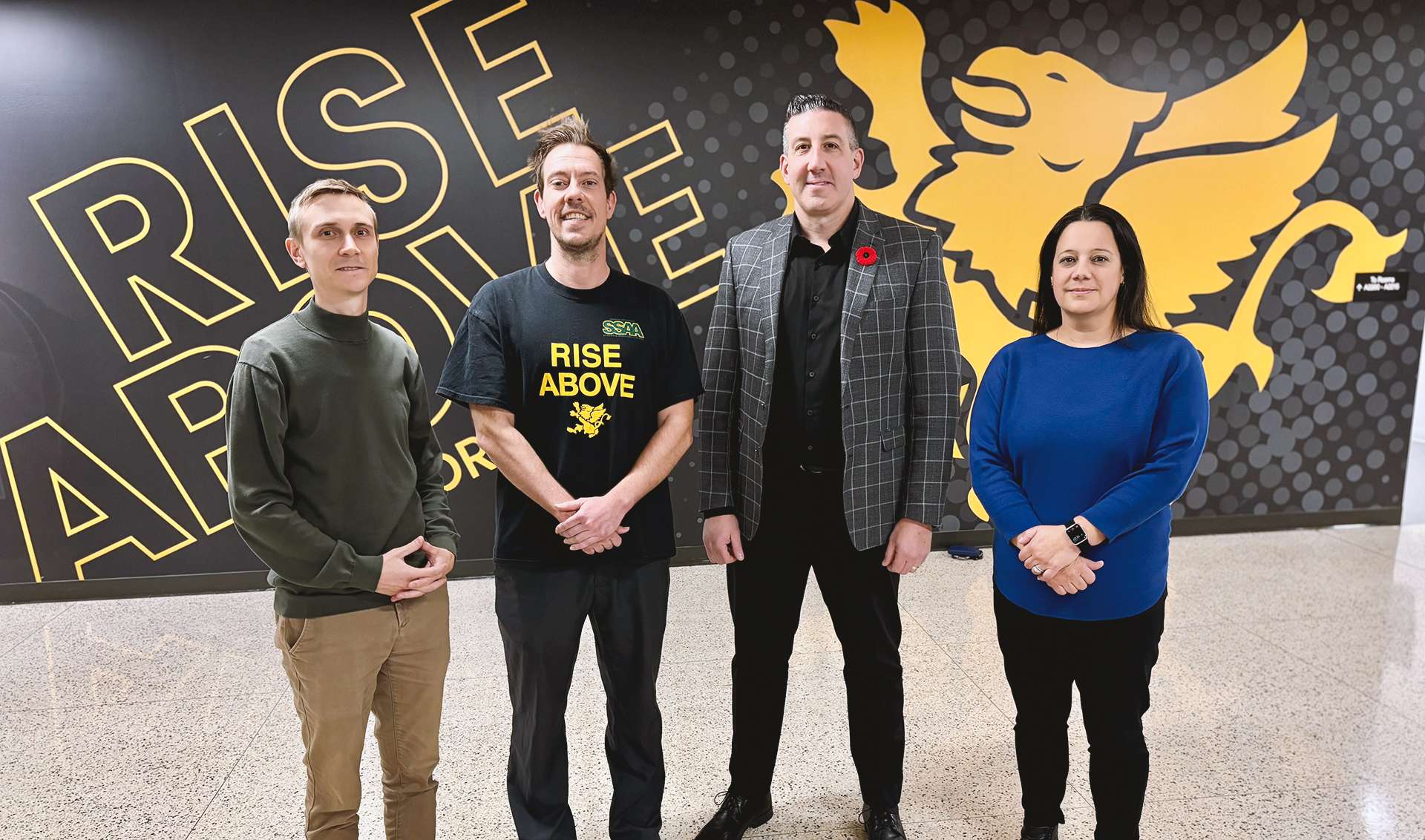
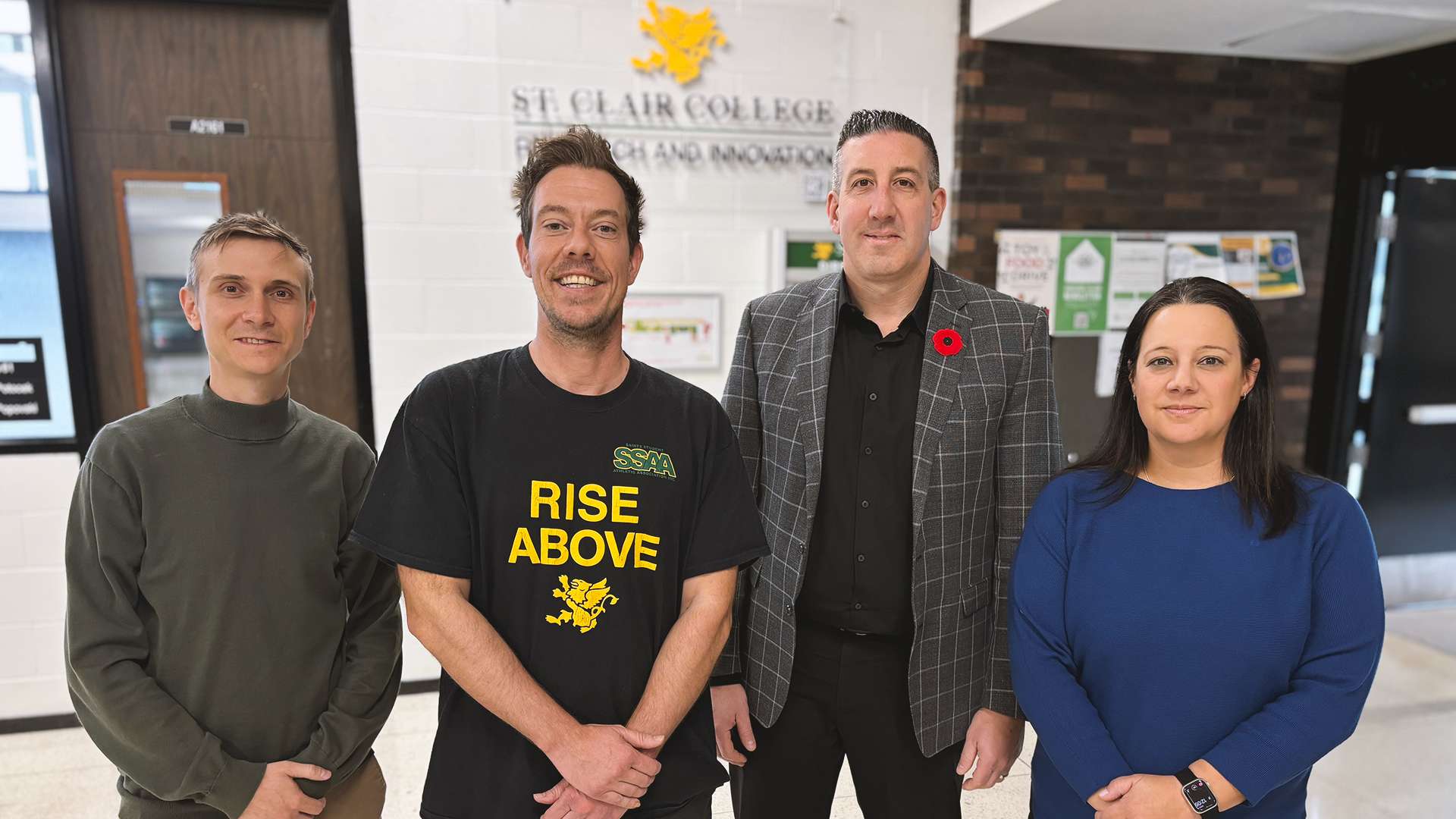
The project is led by Melissa Kakuk, Principal Investigator and Program Coordinator of St. Clair College's Community and Justice Services program. The multidisciplinary research team includes Dr. David Potocek, Project Manager and Primary Applicant; Dr. Kyle Jackson, Co-Applicant; Martina Patee, Project Participant and Primary Investigator; and Stacey Yannacopoulos, Executive Director of New Beginnings, Co-Applicant and community partner representative.
Together, the team brings expertise in community justice, social innovation, youth engagement, applied research, evaluation and community-based service delivery.
NSERC's investment will support research activities, student researchers, faculty participation, community engagement, program delivery, evaluation and knowledge mobilization throughout the three-year initiative.
For St. Clair College Research & Innovation, Bridging the Experience Gap reflects a broader commitment to applied research that connects education, evidence and community experience.
"Opportunity creates experience, experience builds confidence, and confidence opens doors. Even my algorithms can see the human potential in that," said C.L.A.I.R.I.O.N., St. Clair College's Humanoid.
"This project is about creating opportunities for young people to gain the experience, skills, and confidence needed to succeed in the workforce," said Dr. David Potocek, Project Manager with St. Clair College Research & Innovation. "We are grateful to NSERC for supporting a collaborative initiative that brings together youth, community partners, and employers to address a critical workforce challenge."
The project's longer-term ambition is to generate learning that can be tested, shared and adapted, helping communities and employers develop more inclusive pathways to meaningful employment – because the value of research is not determined by funding alone. It is also found in the opportunities people gain, the assumptions that are challenged, and the knowledge that continues to make a difference after the project concludes.
"Research begins with curiosity, but its value is realized beyond our corridors, through the people and communities we learn from," said Dr. Karamjeet K. Dhillon, Director of Research and Innovation at St. Clair College. "Bridging the Experience Gap reflects this understanding, recognizing lived experience as a source of knowledge that can reshape opportunities and create meaningful, lasting impact".